After a couple of days exploring the Danube River valley, we headed off towards our next destination - Austria's Lake District.
 |
| The weather gave the lakes a very cool atmosphere! |
But first, we bid farewell to our home in Melk, the charming Madar Cafe guesthouse!
 |
| You can see Melk Abbey behind us. Our room was right over the mural, on the left there! |
On the way to the Lake District, we first paid a visit to one of the more serious and poignant locations on our itinerary - the Mauthausen Concentration Camp. You really can't visit Austria and Germany without delving into some of the region's dark history, if for nothing else as a reminder of what horror mankind is capable of doing.
The Mauthausen camp system was developed almost immediately upon the annexation of Austria into Germany's "Third Reich", and operated until the end of World War II in 1945 when the Americans liberated the camp. It can be said that it really served as a sort of model by which all camps would follow. Starting as primarily a labor camp for imprisoning and exploiting Russian POWs and various undesirables (Jews and other "sub-tier" races, Communists, mentally handicapped individuals, homosexuals, etc.) to obtain raw materials, particularly granite, for the Reich, it also developed all the horrible tortures and punishments well published today, including mental humiliation, medical experimentation, gas chambers, routine executions, and so on and so forth. However, the primary imprisonment here was for intellectuals that were deemed to be dangerous to the cause. All in all, some 300,000 captives, representing nations all over the world, were imprisoned here, with the vast majority of them perishing before the war's end.

 |
| The grounds of the camp today consist of numerous large monuments erected by the prisoners' nations. Some of these nations no longer exist. It's also interesting to note that the monuments depicted only particularly masculine, heroic imagery, and do not acknowledge female or ill prisoners at all; this reflected the political intent by the various nations to express only heroic strength through the period. |
 |
| A ledge overlooking the granite quarries, which contain a "stairway of death" where prisoners who could not contribute as much labor output were summarily executed/murdered, either by gun or being pushed off the rocks, often by other inmates who were forced into it |
 |
| Showers |
 |
| Toilets |
 |
| A chamber now includes the giant list of the names of those imprisoned here, as sourced from the camps records |
 |
| One of many cremating ovens in the camp. These ovens were operated well over capacity, resulting in the need for numerous "corpse storage areas" on the premises. |
 |
| A marble plaque displaying the numbers of prisoners from major nations that were held here |
After our deep and informative visit to Mauthausen, we made our way to our next destination, the (in)famous lakeside town of Hallstatt.
Hallstatt used to be a
very sleepy town in the lake district of southern Austria, where towering mountains line crystal clear lakes, as shown below in the panorama I took over the town:
There are only about 800 permanent residents in Hallstatt, but each year, this town is visited by over 1 million tourists, mostly via tour bus. The boom in tourism, believe it or not, was due to the town being featured in a Korean drama from the mid-2000s called Spring Waltz (a sequel to the breakthrough "Autumn in my Heart")!
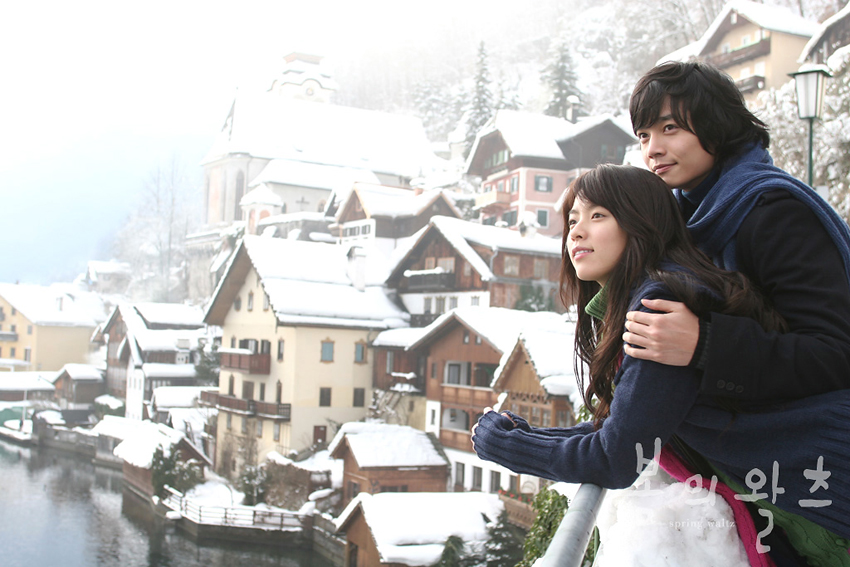
The town is indeed super charming - basically a real-life Disney princess village. However, we found it this feature to be pretty common among many of the little towns we visited, both in and out of the lake district, such as Melk, Durnstein, and St. Gilgen, which we would visit later. The difference is indeed the influx of tourism, which, while significantly boosting the year round economy of the town, has also definitely impacted its overall charm due to the swarms of tourists (mostly Asian), trying to get in the perfect duck face selfie shot by the chapel... In addition, the proprietors of the businesses have also taken on a gruff attitude towards many visitors, which again detracted from the overall experience. Due to the large tourism industry, overnight parking was also quite expensive at 14 Euros per day, which added yet another tariff to the already expensive transportation costs we incurred...

 |
| Most of the houses featured beautiful flowers! I'm not sure if it is orchestrated by the town itself or if the denizens of the town all have similar tastes... |
 |
| You can totally imagine Belle reading a book next to this fountain! |
 |
| An idyllic waterfall high above the town! |
We set up shop in the Gasthof Simony, a large house converted into a bed and breakfast. Its facilities were quite good, with numerous newly renovated (shared) bathrooms and a deck overlooking the lake where you could have meals with a view (when it wasn't raining too hard!).
 |
| A mural outside of our room |
 |
| Speaking of meals, due to the aforementioned observation of shops closing down laughably early, it was a bit of a challenge to find sustenance in the evenings while we were in Hallstatt! Fortunately (or unfortunately) we were able to find a high end restaurant serving local fish for dinner in the first evening! |
 |
| Hallstatt has an interesting chapel, known as the "bone chapel", where the skulls of its deceased inhabitants were collected, processed, and stored in lieu of burying them, since burial space in their cemeteries are limited! The last person to be remembered here passed away in in 1990s, you you can still "apply" to be remembered this way in Hallstatt. |
 |
| We played chess with a Hungarian family |
Our main tourist attraction was the ancient salt mine - purportedly the oldest in the world! It's been active for millennia. Miners from the 18th century discovered that humans have been mining here for thousands of years - up to 7000 years in fact! The mine is still in use today, but even back in the olden times and through the middle ages, the salt was the primary source of valuable trade in this region!
 |
| A salt miner. Hallstatt is famous for its salt mine. |
 |
| We took this funicular to the top of the mountain where the mine is located. |
 |
| The remains of prehistoric miners from nearly 3000 years ago. The salt in the mine helps to preserve them. |
 |
| Water drew the first miners to this location |
 |
| We dressed into our miner outfits to prepare for the tour! |
 |
| Exhibits explaining why there is a salt mine in landlocked Austria. It has to do with prehistoric Pangaea, climate change, and all that good stuff we learned in Geology in grade school! |
 |
| Walking deep into the mine |
 |
| One of the awesome slides to help miners get deeper in the mine faster (or just to add some fun to the tour!) |
 |
| Giant illuminated blocks of salt! |
 |
| Europe's first staircase was also discovered here by archaeologists just a few decades ago! |
 |
| Riding the mine train |
 |
| Pretty tight headroom! |
 |
| Heading over to one of the best views of the whole town... |
 |
| The kids each got to keep a chunk of salt from the mine! |
Now, on to our next major city in our Austrian/German adventure... the scene of one of the greatest American films of all time - Salzburg! Stay tuned!


